
February 08, 2026
Most people decide how they feel about a business before they ever speak to someone. They notice how easy it was to find the entrance, how the space feels when they walk in, and whether it looks intentional or improvised. First impressions happen fast, and they usually stick.
Architecture plays a quiet and powerful role in shaping that impression. The way a space is designed can turn brand values into something people experience physically. When design and branding are aligned, the space reinforces trust, credibility, and clarity without needing an explanation. Signature design can strengthen brand identity, too, if done well. Read on to learn how.
Why Architecture Plays a Key Role in Branding
How Physical Spaces Communicate Company Values
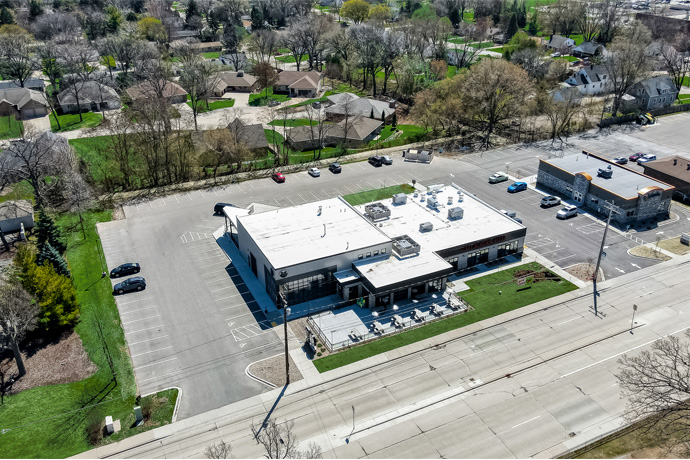
Every physical space sends signals. Layout, materials, lighting, and organization all communicate how a company operates and what it prioritizes. People read those cues instinctively, often without realizing it.
If a brand values efficiency, the space should feel clear and easy to navigate. If it values transparency, the environment should feel open and accessible. If a retail brand values discovery, the space should encourage exploration through clear sightlines, layered displays, and an intuitive path that invites customers to move deeper into the store. If it values simplicity and efficiency, the layout should be direct, uncluttered, and easy to navigate without friction.
When there is a mismatch between stated values and physical experience, people sense it immediately.
The Emotional Impact of Design on Customers and Staff
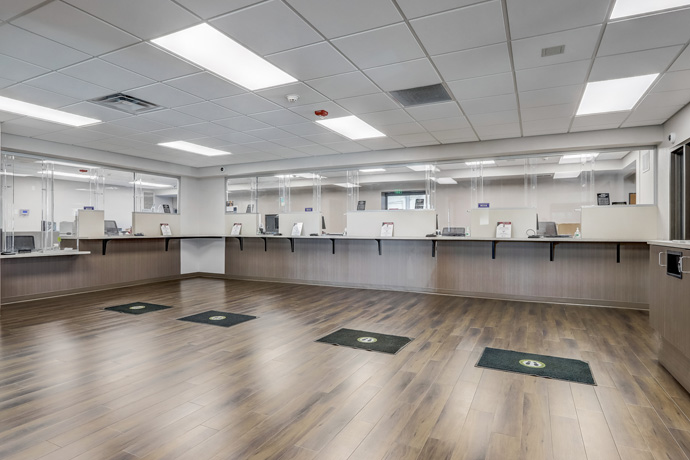
Design affects how people feel the moment they enter a space. Customers decide whether they feel comfortable, confident, or hesitant within seconds. Employees absorb those same signals every day, which affects morale and engagement over time.
Natural light, thoughtful proportions, and clear organization reduce stress and build trust. Poor lighting, cluttered layouts, or neglected details do the opposite. These emotional responses influence behavior long before logic takes over.
Designing for Identity and Consistency
Visual Cohesion Across Multiple Locations
For businesses with more than one location, consistency matters. Customers should recognize the brand experience even when the building itself changes. That familiarity builds trust and confidence.
Consistency does not mean copying the same design everywhere. It means repeating key elements like material palettes, lighting strategies, signage placement, and spatial flow. These shared elements create a recognizable design language.
Aligning Colors, Materials, and Layout with Brand Personality
Materials and colors shape perception as much as logos do. Durable finishes like stone, solid wood, or well-crafted metal suggest reliability, quality, and long-term value. They signal that the brand stands behind what it sells.
Lightweight or innovative materials communicate something different. Glass, modular fixtures, exposed systems, or unexpected finishes suggest flexibility, creativity, and forward momentum. These choices often appeal to customers who value trend awareness and adaptability.
Color reinforces those signals. Muted, consistent palettes feel calm and considered, making products feel more premium and trustworthy. Brighter or higher-contrast colors create energy and draw attention, which can support fast-moving or discovery-driven retail experiences.
Layout reinforces those messages. Open plans feel accessible and collaborative. Structured layouts feel formal and controlled. Before making design decisions, it helps to ask how you want people to behave in the space and how you want them to feel while they are there.
How Architecture Shapes Customer Experience
Flow, Function, and First Impressions
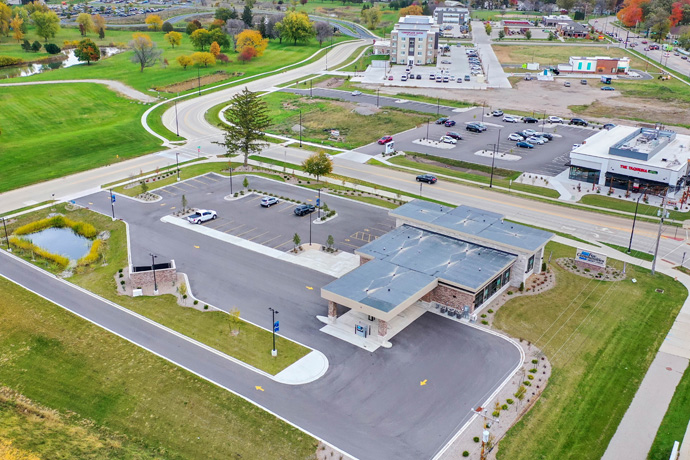
How people enter a space, where they pause, and how they move through it all affect comfort and confidence. Confusion early on creates friction that is hard to undo. Clear sightlines, logical circulation, and intuitive transitions remove unnecessary stress. People should immediately understand where to go and what to do next.
Prioritizing Safety and Site Management
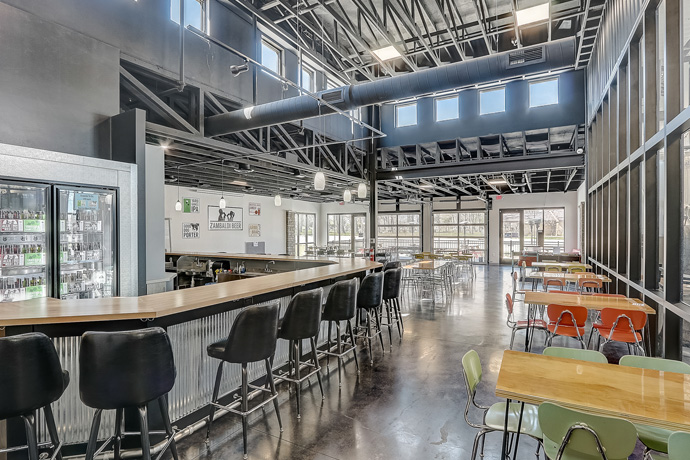
Professional site management includes consistent housekeeping, secure work zones, and strict safety protocols. These practices protect workers, staff, and visitors while also reducing delays caused by preventable incidents. Clean, organized job sites also tend to move more efficiently, which benefits both schedule and budget.
Examples of Brand-Driven Design
Office Spaces That Reflect Professionalism
Professional offices succeed when they balance credibility with comfort. Clients want to feel confident in the expertise of the business, but also at ease during conversations. Architecture supports this balance through clarity, proportion, and material quality.
For example, a law firm or financial office might use a clean, well-lit reception area with durable finishes and simple signage to immediately communicate organization and trust. Meeting rooms arranged around shared tables, rather than oversized desks, signal collaboration instead of hierarchy. Employee spaces designed with quiet zones and clear circulation support focus without making the environment feel rigid or closed off.
Retail Environments That Tell a Story
Retail spaces are physical expressions of a brand’s story. Layout guides how customers move through the space and what they notice first. Displays highlight what the brand values, while materials reinforce identity at every touchpoint.
A boutique clothing store, for instance, might use a clear, flowing path with layered displays that encourage browsing, reinforcing a sense of discovery. A premium retailer may choose restrained layouts and high-quality finishes to slow the experience and elevate perceived value. In both cases, customers are guided naturally without feeling rushed or overwhelmed.
When the environment supports the story, people remember the experience long after the purchase. Memorable spaces create emotional connection, improving brand loyalty.
Choosing a Design Build Partner That Understands Branding
The Advantage of Integrated Design and Construction
Brand-driven architecture works best when branding is considered from the start. An integrated design-build approach aligns branding goals, budget, and construction realities early in the process.
This reduces redesigns, controls costs, and protects design intent through construction. Decisions are made with both aesthetics and long-term performance in mind. The result is a space that looks right and functions well.
Collaboration Between Architects, Designers, and Builders
Strong outcomes depend on collaboration. Architects translate brand vision into form. Designers refine experience and detail. Builders ensure quality execution and feasibility.
When these teams work closely together, challenges are addressed before they become expensive problems. Materials, timelines, and budgets stay aligned around a shared purpose. Collaboration turns vision into reality.
Final Thoughts on Building Your Brand Through Design
Why Consistency and Intentionality Lead to Lasting Impressions
Lasting impressions come from repeated, consistent experiences, not one-time moments. Architecture reinforces a brand every day through the way people move through a space, interact within it, and feel while they are there. When design decisions are intentional and aligned, those impressions become reliable and memorable over time.
Architecture is one of the most durable brand investments a business can make. Unlike marketing campaigns that change frequently, physical spaces shape perception every day for years. People remember how a place made them feel.
DeLeers partners with clients to design and build environments that align identity, function, and long-term value. If you are planning a new build or renovation, we would love to talk about how intentional design can support your brand.
Message or call our experts at 920-347-5830 with any questions about hiring professionals for commercial construction projects!
- Share:
-

-

-

-


