
February 08, 2026
The best work conversations rarely happen in scheduled meetings. They happen when someone overhears an idea, pulls up a chair, and adds a perspective that changes the direction entirely. Those moments feel spontaneous, but they are always supported by the space around them.
Most offices were not designed for this kind of interaction. They were built for efficiency, separation, and individual output. Today’s teams work faster and more collaboratively, and the environments they work in need to reflect that reality.
Why Collaborative Design Matters in Today’s Workplaces
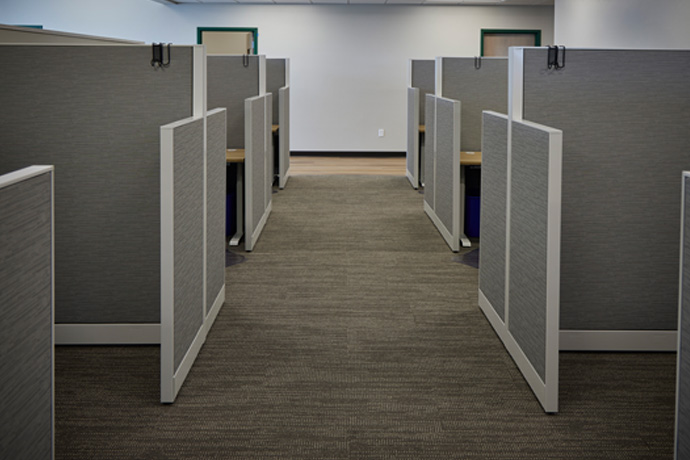
The Shift from Cubicles to Connection
Older office layouts assumed work happened in isolation. People were expected to focus quietly, then share results later. Cubicles support that structure, but they limit real-time collaboration.
Modern work is more fluid. Ideas develop through conversation, iteration, and shared problem-solving. Spaces need to allow people to move between focus and interaction without disruption. A useful test is to ask how many steps it takes to have a quick conversation. If collaboration feels inconvenient, it will not happen often.
How Office Design Shapes Company Culture
Culture is shaped by what people feel comfortable doing every day. If starting a conversation feels intrusive, people stay quiet. If spaces feel open and inviting, collaboration becomes normal.
Office design sends signals about trust and hierarchy. Central shared spaces suggest openness. Hidden or inaccessible areas suggest separation. These signals affect behavior more than policies do. When evaluating your space, ask what behaviors it quietly encourages and which ones it discourages.
Space Planning That Encourages Interaction
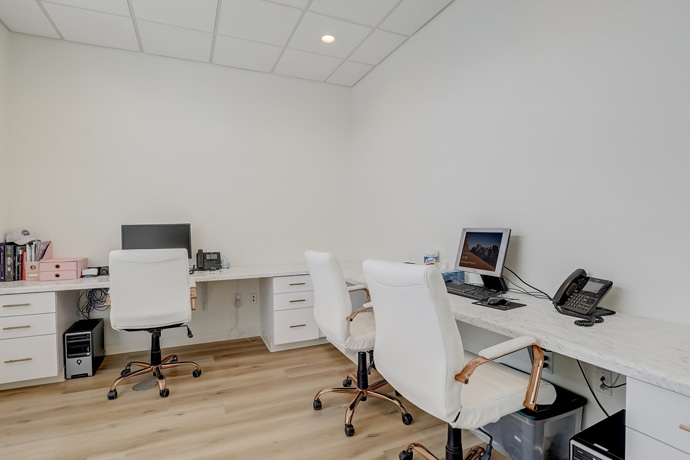
Open Concepts vs. Defined Zones
Open offices became popular because they made spaces feel more connected and less formal. The issue is that many of them removed walls without replacing them with any guidance on how different areas should be used. When everything looks the same, people are left guessing what behavior is appropriate.
Well-designed workplaces make expectations clear through layout and design. Some spaces are intentionally social and active, while others are clearly meant for quiet, focused work. People should be able to understand how to use a space without being told.
A simple rule of thumb: if people constantly apologize for talking, whisper in shared areas, or avoid using a space altogether, the zoning is not doing its job.
Balancing Focus Areas with Team Hubs
Collaboration works best when it has a clear place to happen. Team hubs should be easy to reach and clearly set up for conversation, whether that means shared tables, whiteboards, or screens that support quick discussion. When these spaces are obvious, people use them naturally instead of improvising in the wrong places.
Focus areas need the opposite treatment. They should feel intentionally protected through acoustic control, visual separation, and placement away from high-traffic zones. When people trust that focus spaces will stay quiet, they are more willing to step into collaborative areas when conversation is needed.
Design Elements That Foster Creativity
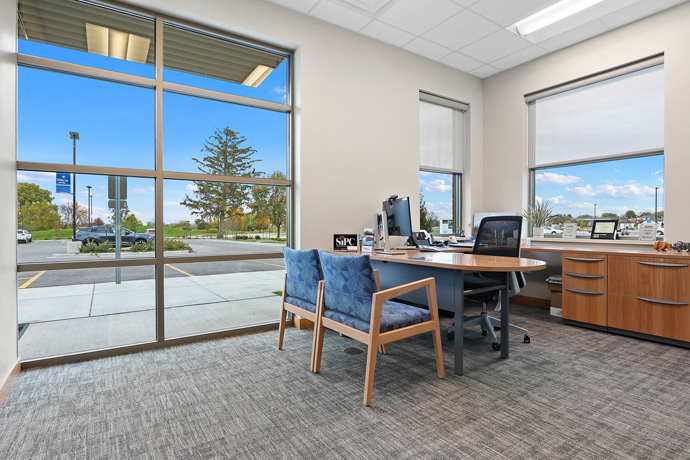
Lighting, Color, and Flexible Furniture
Lighting sets the tone for how a space is used. Bright, even lighting helps people focus, while warmer, layered lighting makes conversation and brainstorming feel more natural. When lighting matches the activity, people settle into the work more easily.
Color works best when it is used with restraint. Neutral foundations reduce visual fatigue, while controlled accents add energy without becoming distracting. Overstimulating spaces often feel exciting at first but become exhausting over time.
Furniture flexibility is one of the simplest ways to support creativity. When tables, chairs, and surfaces are easy to move, teams adapt the space to the task instead of forcing the task into a fixed layout. If rearranging a space feels like work, people stop doing it.
The Role of Comfort in Collaboration
Comfort has a direct impact on participation. Uncomfortable seating shortens meetings and discourages informal discussion, even when the conversation is productive. Poor ergonomics pull attention away from ideas and toward physical discomfort.
Comfort does not mean casual or unprofessional design. It means furniture that supports posture, movement, and different working styles throughout the day. When people are physically at ease, they stay engaged longer and contribute more openly.
Incorporating Technology for Seamless Teamwork
Conference Tech, Smart Boards, and Shared Displays
Technology should support collaboration quietly. When tools are unreliable or difficult to use, meetings lose momentum, and attention shifts away from the conversation. Simple, intuitive systems allow people to focus on ideas instead of troubleshooting.
Screens should be easy for everyone in the room to see, regardless of where they are seated. Controls should be obvious and consistent across rooms. Smart boards are most effective when they support spontaneous thinking rather than formal presentations.
Supporting Hybrid and Remote Teams
Hybrid collaboration requires deliberate planning. Remote participants often feel secondary when spaces are designed only for those in the room. Camera placement, audio clarity, and screen visibility all affect how included they feel.
Meeting rooms should be designed so that remote participants can see and hear clearly and be seen and heard in return. Seating layouts, lighting, and acoustics all play a role in this balance. When remote team members are treated as equal participants, collaboration stays strong regardless of location.
DeLeers brings design and construction together under one roof, ensuring that collaborative goals are built into the space from day one. Reach out to start a conversation about how your workplace can work better for your team.
Message or call our experts at 920-347-5830 with any questions about hiring professionals for commercial construction projects!
- Share:
-

-

-

-


