
May 17, 2026
Few design decisions shape the way a home feels more than the floor plan. Long before cabinetry, flooring, or finishes are selected, the layout determines how people move through the home, how spaces connect, how noise travels, where natural light lands, and whether daily life feels easy or constantly interrupted.
That is why one of the earliest and most important conversations in custom home design is whether the home should lean toward an open concept or a more traditionally segmented layout. There is no universal “better” choice. Both layouts offer clear advantages, and the right answer depends less on trends and more on how your family actually lives.
Defining Open-Concept and Traditional Layouts
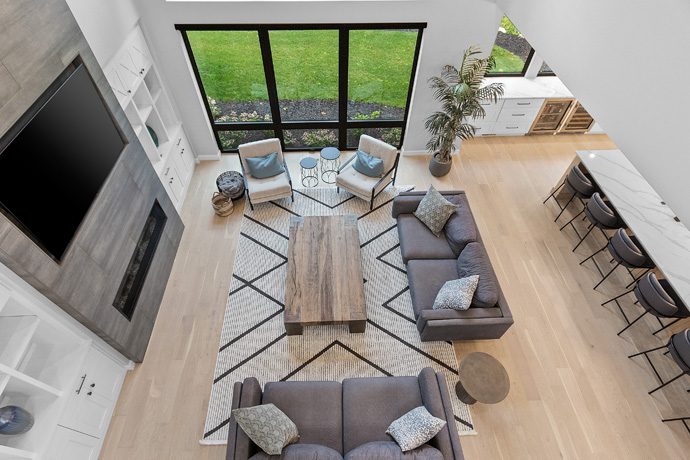
An open-concept floor plan removes many of the dividing walls between the kitchen, dining room, and living room, creating one larger shared space. The goal is connection: better sightlines, easier movement, and a home that feels larger and brighter.
Traditional floor plans separate these rooms into distinct areas with defined boundaries. Kitchens are often more enclosed, dining rooms function independently, and living spaces are intentionally divided from one another.
While open layouts have dominated home design conversations for the last two decades, traditional plans never disappeared for one simple reason: they solve problems open layouts do not.
The strongest custom homes are rarely designed around trends alone. They are designed around the family’s routines, noise tolerance, hosting style, and long-term comfort.
Pros and Cons of Open-Concept Spaces
Open-concept homes are popular because they create an immediate feeling of spaciousness. In many cases, they also make older or moderately sized homes feel significantly larger without adding square footage.
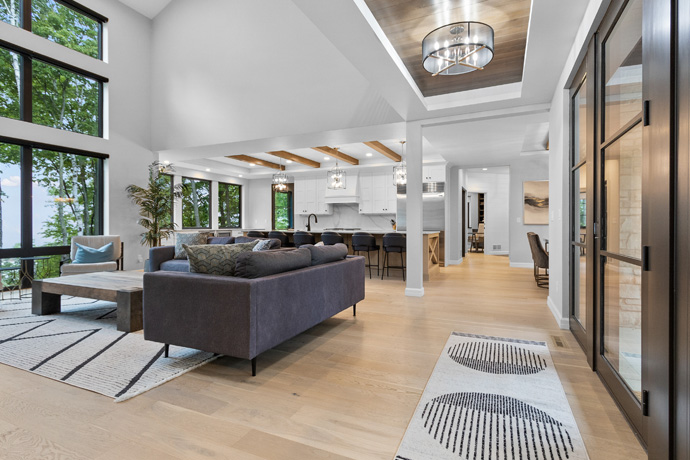
Light, Flow, and Flexibility
Removing interior walls allows natural light to move farther through the home, which can completely change the atmosphere of a main living area. Instead of light stopping at each enclosed room, it spreads across the kitchen, dining, and living spaces at once.
This layout also improves traffic flow. Parents can cook while still interacting with children in the living room. Guests can gather naturally without being split between rooms. Large holidays, casual entertaining, and day-to-day family life often feel more social because everyone shares the same central environment.
Open spaces also offer flexibility in furniture arrangement and future use. A dining area can shift, an oversized island can become a work zone, and the main living footprint can adapt more easily as family needs change.
Noise, Privacy, and Clutter
The tradeoff is that everything travels. Sound from televisions, conversations, cooking, and appliances moves across the entire shared space. There are fewer places to retreat, fewer visual barriers, and less forgiveness when everyday clutter accumulates.
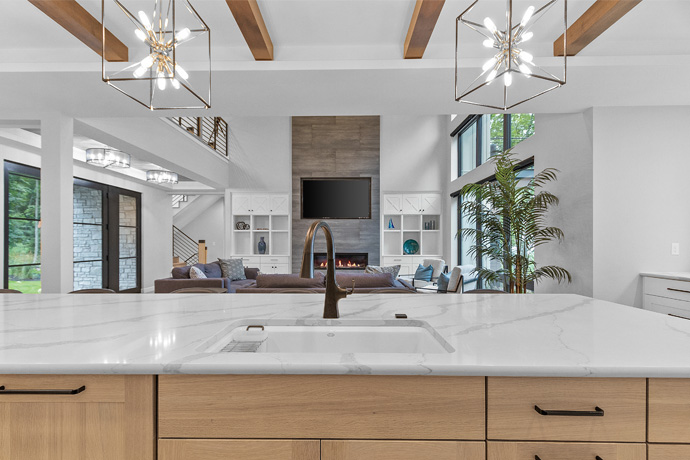
An open kitchen means dishes, meal prep, groceries, and countertop mess become part of the main living view at nearly all times. For some families, that feels energetic and connected. For others, it feels like the house is never truly quiet.
Pros and Cons of Traditional Floor Plans
Traditional layouts offer the opposite benefit: separation. Instead of one large communal zone handling every activity, the home creates smaller spaces with specific purposes.
Quiet Zones and Separation
This can make daily life feel calmer, especially in larger families. One person can cook while another takes a work call. Children can watch television without dominating the entire first floor acoustically. Guests can gather in a dining room while kitchen prep stays somewhat hidden.
Traditional layouts also create stronger visual control. Not every room has to be “on display” at once, which many homeowners find more relaxing and easier to maintain.
There is a reason libraries, dens, formal dining rooms, and enclosed studies are quietly making a return in custom home design: homeowners still value doors.
Heating Efficiency and Comfort
Segmented rooms can also create comfort advantages, particularly in Wisconsin.
Large open spaces are beautiful, but they can be harder to heat evenly and harder to cool consistently without strong HVAC planning. High ceilings and wide, uninterrupted square footage often create temperature inconsistencies if not designed carefully.
Traditional layouts naturally contain conditioned air more effectively because rooms can be zoned and controlled with greater precision. That does not mean open-concept homes are inefficient, but it does mean mechanical design becomes far more important.
Assessing Your Family’s Lifestyle
The right layout usually becomes obvious once homeowners stop asking what looks modern and start asking how the house will function on an average Tuesday.
Entertaining and Daily Routines
Families who host often, cook socially, or spend most evenings gathered in one shared space usually benefit from some degree of openness. The ability to move freely between the kitchen, dining, and lounge areas creates a home that feels active and welcoming.
But families who value quiet mornings, separate hobbies, homework zones, or less visual stimulation often prefer a floor plan with more division.
The question is not whether you like the look of open-concept photos online. The question is whether you want to hear every conversation, every appliance, and every activity from one end of the room to the other.
Work-From-Home Needs
This has become one of the biggest drivers in floor plan design. As more homeowners work at least part-time remotely, fully open layouts can become frustrating. Conference calls, focused work, children home after school, and general household movement do not coexist especially well in one giant shared volume.
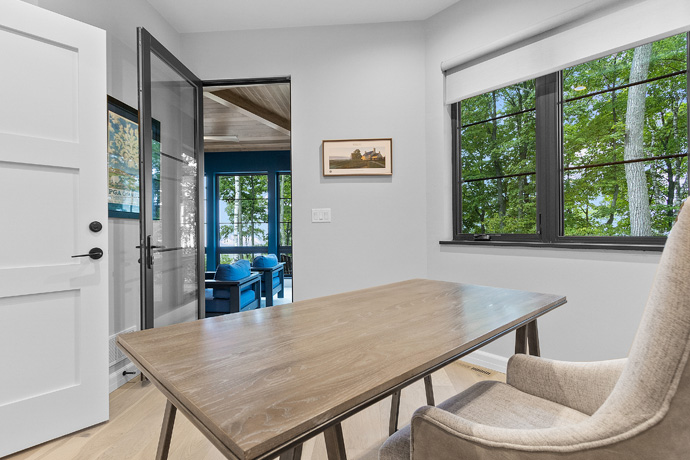
Dedicated offices, enclosed flex rooms, pocket-door studies, and semi-private secondary lounges have become increasingly important because many families need separation during the day, even if they want connection at night.
Climate and Energy Considerations in Wisconsin
Wisconsin homes have to perform through long winters, fluctuating shoulder seasons, and humid summers. That means the floor plan is not only an aesthetic decision. It is also an energy decision.
HVAC Zoning Strategies
Open-concept homes benefit significantly from intentional HVAC zoning, properly sized returns, strategic insulation, and careful ceiling-height planning. Without those details, large shared spaces can develop cold pockets in winter and uneven cooling in summer.
Traditional layouts often regulate temperature more naturally because conditioned air is distributed across smaller enclosed areas.
This is why floor plan and mechanical planning should never be treated as separate conversations. A beautiful design still needs to live comfortably in January.
Designing Your Ideal Plan
Hybrid Layouts That Do Both
In practice, many of today’s best custom homes blend the strengths of both styles. A kitchen, dining, and great room may remain open, while a tucked-away office, den, scullery, media room, or formal dining space provides needed separation. This hybrid approach allows connection where it matters most without forcing every activity into one acoustic zone.
Choosing between open-concept and traditional is ultimately less about what is popular and more about what will make your home feel comfortable ten years from now, not just impressive on move-in day.
DeLeers works closely with homeowners to think through those decisions before construction begins, creating homes that feel as functional as they are beautiful. Reach out today to learn how we can help design your future home.
Message or call our experts at 920-347-5830 with any questions about hiring professionals to build your dream home!
- Share:
-

-

-

-


